Soft robots as representations of emotions
Robots can help explore how internal human states can be physically embodied, creating new forms of interaction beyond screens or symbols. This opens a pathway for soft robots as expressive, emotional, and communicative media in art and human–robot interaction.
This recent study explores emotion-mediated soft robotic art by linking human brain alpha waves to the dynamic movement of soft robotic embodiments. Two artworks—a soft character and a soft flower—demonstrate how soft robots can physically embody emotional states for expressive and interactive art.
Read related work here
Robots as art
This photo, awarded runner-up at the RoboSoft 2026 art gallery, reflects how robots can become more than machines. They can also carry meaningful messages through art.
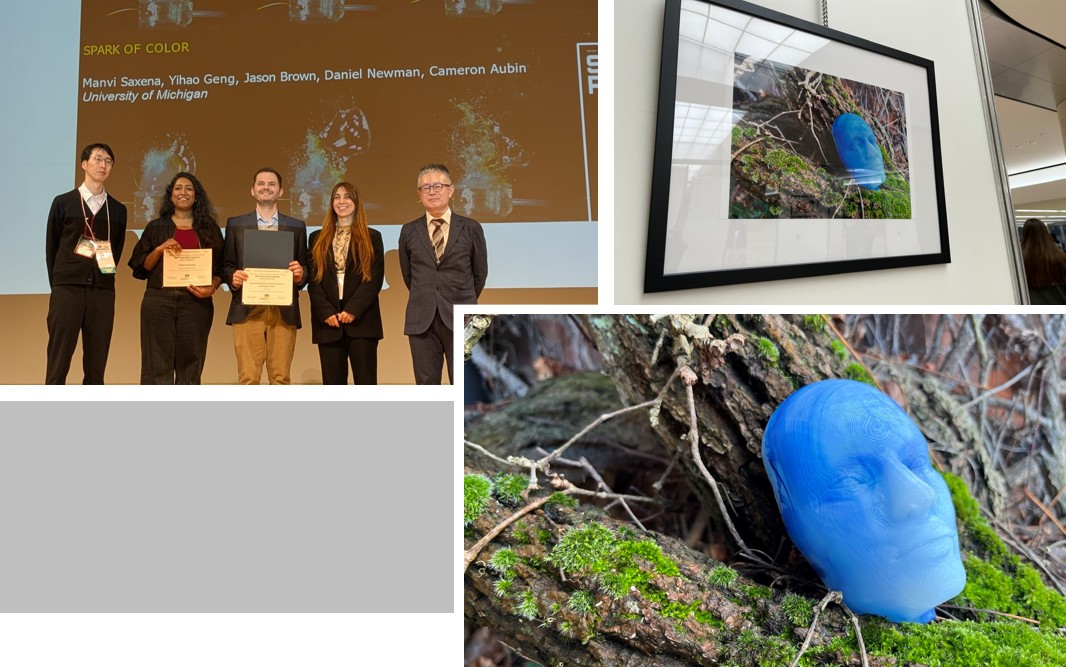
Title: A Non-Digital Message
Abstract: This work presents a gender-neutral human face cast in silicone as a physical interface through which robots can communicate in ways that remain grounded in the natural world. Rather than relying on fully digital avatars or screen-based expressions, the piece explores how soft, tactile materials can carry robotic intent through subtle deformation, texture, and contact. Silicone; chosen for its skin-like compliance and responsiveness, acts as a medium for translating robotic signals into gestures that feel organic, familiar, and emotionally legible.
By embedding robotic messaging within a physical, touchable form, the work challenges the increasing digitalisation of human–robot communication and asks how machines might remain materially connected to human sensory experience. The face does not imitate a specific individual; instead, its neutrality invites projection, interaction, and reflection on shared embodiment. Positioned between sculpture and interface, the piece proposes a future in which robots express themselves not through abstraction or screens, but through soft, bio-inspired forms that resonate with human perception and memory.